The full name is Sourindra Kishore Chakraborty, which is as unnecessarily convoluted as my thought process. My biological youth is frequently undermined by my existential gloom, which might be visible at times. I am initiating this blog to channelise my immense love for cinema and its role in society, and its exploration is going to be appropriately multi-faceted/interdisciplinary.
বেশ কিছু লেখা বাংলাতেও থাকবে, কারণ আমার একাধিক ভাষা ধ্বংস করার ইচ্ছে আছে।
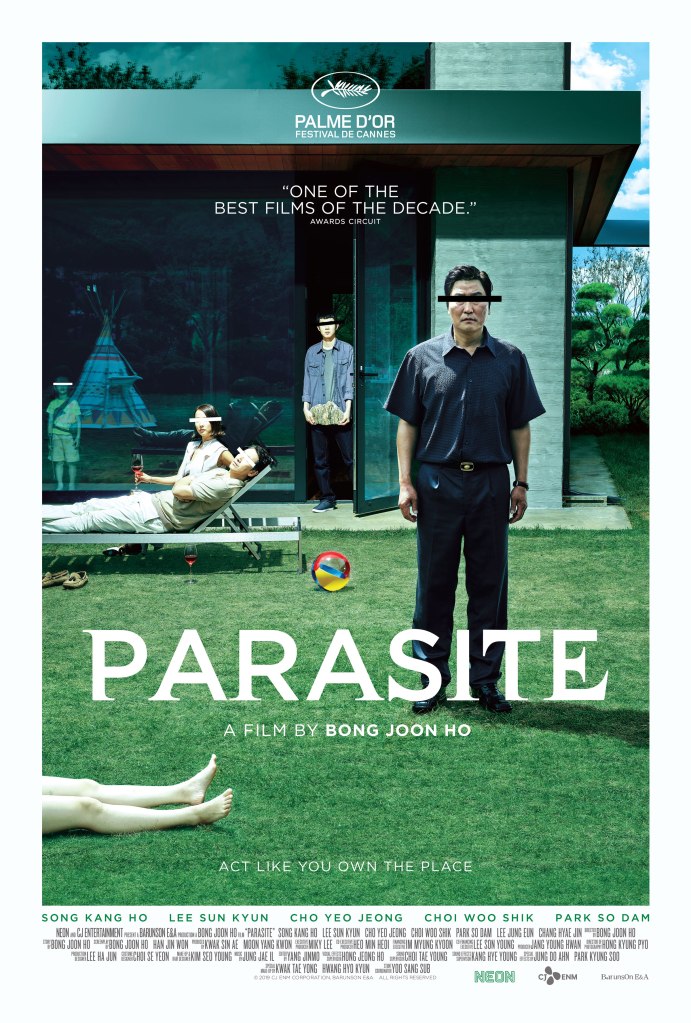
Even though it has had its screenings in multiple film festivals around the world and its theatrical release in many different countries, I have carefully resisted the temptation to watch Bong Joon-ho’s ‘Parasite’ on any virtual platform, because I was keen on watching the “brilliance” of this “modern masterpiece” unfurl in a theatre (its intended viewing space). To say that my expectations were naturally aroused owing to the overwhelming adulation it has received would be an understatement. To say that the film superseded my greatest expectations, however, would be a bigger understatement.
The central story is deceptively simple. The economically disadvantaged Kim family, consisting of father Kim Ki-taek, mother Chung-sook, son Kim Ki-woo, and daughter Kim Ki-jeong, live in a small basement apartment and are compelled to resort to temporary jobs with paltry remunerations to make ends meet. Through a providential turn of events, the son finds employment as an English tutor for the daughter of the vastly wealthier Park family, consisting of father Park Dong-ik, mother Yeon-gyo, daughter Park Da-hye, and son Park Da-Song. The plot thickens as all the members of the Kim family scheme to become employed by the Park family by deceitfully infiltrating their household and pretending to be unrelated and highly qualified professionals.
I am painfully aware that there is very little (perhaps nothing) for me to say about this film that has not already been said. I must, however, attempt to convey my sincere appreciation for the film as sincerely as possible. The root of that appreciation is the masterful screenplay and the storytelling techniques employed by Bong and co-screenwriter Han Jin-won. The dialogues are pithy and purposive, but they never feel unnatural. The feel of the film is distinctively reminiscent of many of Bong’s earlier films, such as ‘Barking Dogs Never Bite’ (2000), ‘Memories of Murder’ (2003), and ‘The Host’ (2006); the writing is precise and taut, the social commentary is incisive, the mood is consistently inconsistent, the hybridisation of multiple typically separate genres is skilfully achieved, and the frequent touches of humour are delectably dark. Another familiar technique is the visual cyclicism that Bong has employed in certain earlier films like ‘Memories of Murder’ (2003), ‘Mother’ (2009), and ‘Okja’ (2014); the film begins with a shot of the Kim family’s socks hanging from a height in their apartment and ends on a similar note. It elicits a strange sense of pragmatism swathed in gloom; despite the monumental events that have transpired in the lives of these people, the larger world remains unchanged, and their world remains bound to their circumstances by the larger structures(s) that the film attempts to examine. A “happy ending” is often achieved through visually and metaphorically projecting the individual as someone who rises above the constraints enforced by intersecting elements in their milieu; but, in this implicit rejection of the power of the individual over the social structures presiding over them, the film is evocative of sociologist Émile Durkheim’s positivist theory of social facts, which posits that social facts are norms and structures that transcend the might of every individual and exercise social control over them.
There are several symbolic motifs that are utilised to great effect; most notably, elevations and odours. Even at their most anxious, the affluent elite are constantly shown climbing staircases. The residence of the Park family is also positioned on one side of a slope, which must be scaled by “lesser” individuals to reach. In constrast, the Kim family lives in a basement apartment, the windows of which barely peer above the street; these apartments are characteristic of urban settlements in many countries around the world, particularly in South Korea and its capital city Seoul. Their living space resembles a class-enforced purgatory from which the elevated outer world is visible enough to strive toward, but not accessible enough to possess. In the case of odours, the recurring element is the (figurative and literal) stench of poverty; there is frequent mention of it, and those who are farther from class aspirationalism detest the unpleasant odour of those who are closer to it. It is evident that the writers have constructed the narrative keeping in mind both the metaphorical nature of the film and the tangibly polarised circumstances of the people it depicts.
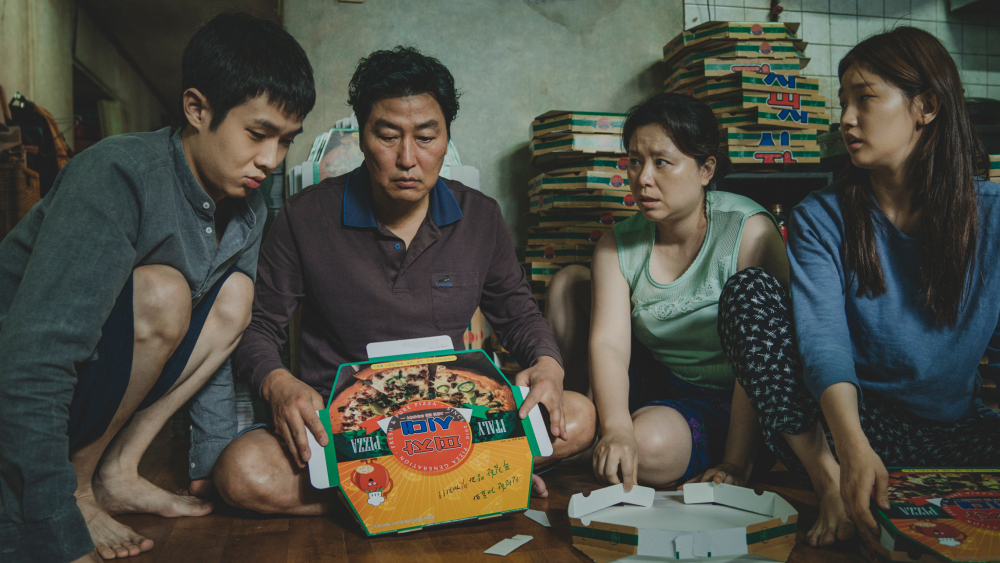
(From L-R) Choi Woo-shik, Song Kang-ho, Chang Hyae-jin, and Park So-dam in a still from the film.
The cinematography of Hong Kyung-pyo is strikingly assured and delicate; it is as if each frame has been adeptly designed to showcase the allegorical absurdity of the narrative. The camerawork keeps the viewer fully invested in the film despite the limited locations within which it advances, and the shots feel simultaneously well-timed and organic, which is highly commendable. I must also mention Yang Jin-mo’s superlative editing, which, combined with the cinematography, not only contributes to the film’s crisp finesse, but also gives us one of the best montages in recent memory. The montage chronicles the events leading up to the ordination of the Kim family’s mother into the Park household, set wonderfully against the classical piece ‘Spietati, io vi giurai’ from George Frideric Handel’s opera seria ‘Rodelinda’ (classical music is used more than once in the film).
A memorable montage, for me, should not be content with compressing narrative information through an economical ordering of shots; it must be one that positions itself seamlessly within the larger film, while also displaying relevance as a self-contained cinematic unit unto itself. Here, the makers achieve just that. The montage acts as a representative of a specifically prodigious quality of the film; the rhythm and the pacing are beautifully calibrated through the cinematography, the sound design, and the editing, which provide a comfortable mobility within the advancing narrative, and this is imperative for a film that frequently changes its mood and its cadence. They guide the viewer through the intermittent tonal shifts without letting one feel so much as a single bump. Lee Ha-jun’s production design is also a significant contributor to this effect, and it succeeds in potently realising the stark contrast between the characters. The Park household, in particular, is an ostentatious display of both wealth and empty space; the spatial vastness (and hollowness) serves as a reminder of the unwillingness of the wealthy to share what they dearly possess and what the less fortunate dearly desire.
The actors perform their roles with appropriate conviction. Each actor’s reliance on the other is less parasitic and more symbiotic. Song Kang-ho, Choi Woo-shik, Park So-dam, and Chang Hyae-jin portray the co-existent craftiness and desperation of the Kim family without faltering. The vulnerability of Choi as Kim Ki-woo is especially impressive. Lee Sun-kyun, Cho Yeo-jeong, and Jeong Ji-so effortlessly embody the naïveté and hubris of the Park family. Lee Jung-eun delivers a surprisingly noteworthy performance as Gook Moon-gwang, the Park family’s original housekeeper who loses her job owing to the duplicitous conspiracy of the Kims.
Cho Yeo-jeong in a still from the film.
When speaking about his 2013 film ‘Snowpiercer’ with IndieWire, Bong termed it a “hallway movie”; it was a reference to the fact that the film is a tale of class warfare within the passengers of a train who happen to be the last humans on Earth, set against a dystopian world engulfed by political strife and global warming. Each section of the train represents a socio-economic class, and there is a horizontal class progression from the caboose to the head. In a press conference at the Cannes Film Festival, he referred to ‘Parasite’ as a “stairway movie”; this is not merely a reference to its frequent use of staircases, but to its exploration of social hierarchies and its willingness to scrutinise each rung of the social ladder. In essence, it is a parable about the pitfalls of modern capitalism sans the moral preaching at the end. While it most certainly delves into the prominent themes of class conflict and socio-economic inequality, it avoids absolutism in its investigation into privilege, and chooses instead to acknowledge the relative privilege that is an intrinsic part of the class hierarchy. It tactfully circumvents the temptation to formulate a moral binary that can naturally arise from a cursory perusal of Classical Marxism; it refuses to blatantly champion the proletariat (the Kim family) as the shimmering representative of accepted ethical codes, or to portray the wealthy bourgeoisie (the Park family) as sinister embodiments of “evil vices”. On the contrary, it presents the Kim family as a conniving and disingenuous lot, while the Park family is presented as a study in convivial affability. The film does offer a subtle justification for this, however; through an interaction between the Kims, it establishes prevailing notions of civility as luxuries of the privileged. In the story’s world (and perhaps ours), the internalised lust for hierarchical progress in a capitalist framework ensures that the poor cannot afford to be congenial or altruistic, because neither congeniality nor altruism ensure sustenance; deceit and manipulation often do. In this regard, the Marxist concept of alienation becomes relevant. Karl Marx spoke of a multi-faceted alienation that occurs as a systematic result of capitalism; along with the alienation of the labouring class from the the fruits of their labour (the surplus value of which is exploited by the capitalist class), Marx described the estrangement of individuals from the core of their ‘Gattungswesen’ (which roughly translates to “species-essence” or “species-being”) as a result of social stratification, thus alienating one from oneself and one’s sense of humanity.
These readings of the film lead us to a larger and more complex question: who, then, is the eponymous parasite of the film? To begin with, we could tackle two obvious interpretations. One, the elite is the parasite that is empowering itself by sucking on those that are more disadvantaged; their cruel disconnect from their surroundings manifests itself in the form of an explicit aversion to the aforementioned “stench of poverty” and the implied disgust that poverty makes them feel. The severity of this perennial humiliation is so casually inhumane that it might not even be noticeable. Two, the poor is the parasite, feeding on both those who are richer and those who are poorer; the Kim family attempt to worm their way into (pun intended) the Park household through dishonest means, and momentarily thrive because of the Parks’s gullible nature. Under the guise of ensuring their upward climb along the class ladder, they have become as averse to the needs of those who are even less fortunate than they are as the elite has become indifferent to theirs. Even in scenarios that could result in mutual benefit, their instinct is self-interest.
However, can more abstract concepts and emotions also be construed as parasites? Can avarice be thought of as an overarching parasite, that sucks the soul out of human beings regardless of their social status? Can capitalism and economic inequality be thought of as the parasites that feed on this same greed that propels market competition and pushes humankind towards eventual darkness? Or, is the hope of the poor the parasite that slowly eats into the lives of the oppressed by feeding them the illusion that their lives can be elevated beyond servitude and bondage?
The film poses many such disconcerting questions, but does not attempt to provide all the comfortable answers. Bong does not mince his sentiments at the cost of brtual honesty, and his film is as unrelenting in its commitment to its vision of social realism as it is assertive in its ambiguity. For that alone (and much more, of course), the film deserves all the plaudits it has received.
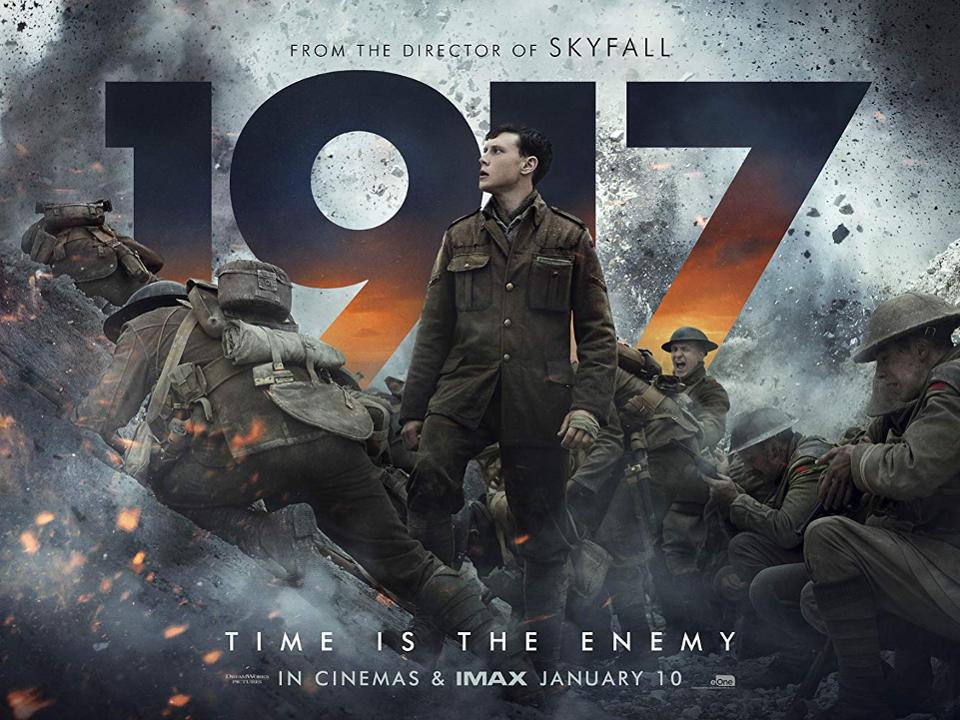
A palpable sense of dread and gloom looms over Sam Mendes’s ‘1917’; the inherently horrific wartime scenario coupled with the sheer unpredictability of the situation in which its protagonists find themselves creates a cinematic experience that is exhilarating and disconcerting in equal measures.
In April 1917, the major countries of the world are embroiled in the First World War. Troops of the Imperial German Army have mysteriously evacuated themselves from a portion of the Western Front in northern France. Two young British soldiers, Lance Corporals William Schofield and Thomas Blake, are told that aerial reconaissance has observed that the Germans are not retreating, as the Allied Forces might have hoped; instead, they are executing a tactical withdrawal by shifting their troops to their new Hindenburg Line, where they intend to lure Allied troops for the pupose of bombarding them with artillery. With field telephone lines indefinitely impaired, Schofield and Blake must travel through no man’s land and reportedly abandoned German territory to physically deliver a message to the Second Battalion of the Devonshire Regiment to cease their planned morning attack, which, if implemented, will lead to the deaths of 1600 soldiers, including Blake’s elder brother Lieutenant Joseph Blake.
Although the film does not associate itself too explicitly with its larger historical context, a perfunctory understanding of the geopolitical conditions of the time might enhance the viewing of the film. In February 1917, the War was almost reaching a point of perplexing stagnation on the Western Front; the Allies and the Central Powers were brutally combating each other’s forces, but neither side was making substantive progress towards securing victory. A prolonged stalemate was threatening each side’s hopes of securing an upper hand. It was at this time that German General Erich Ludendorff ordered for Operation Alberich to be executed, which meant that German troops would be strategically withdrawn and shifted to the newly built and fortified Hindenburg Line, thus consolidating their forces in preparation for more impactful offensive operations (such as Operation Michael, a campaign in the spring of 1918 that entailed the Germans breaking through British lines and advancing farther to the West than they had ever gone before, and it was not till the 29th of September in 1918 that the Allies could infiltrate the Line). This created a period of terrifying confusion amongst the Allies, who were uncertain as to whether or not the Germans had truly retreated, and if they had, it was unimaginably difficult to gauge what the reason behind an abrupt retreat of the sort might have been.
Mendes and co-writer Krysty Wilson-Cairns utilise this stupendous confusion to propel the narrative, and to create the looming suspense that the film houses. Even in the most seemingly mundane moments, the viewer cannot help but clasp their armrest in anxious anticipation of a thousand things that might imperil the protagonists. The essential story is uncomplicated, but there is enough vigour in its mobility to mask the plot’s simplicity. The dialogue-writing is delicate and succinct; the film is not verbose in the least, but the dialogue is not insufficient; it is expository enough to convey the humanity of the characters without straying into a territory that would jeopardise its realist approach. Besides, there is something hauntingly disarming about observing two justifiably jittery individuals jesting casually with each other while flirting with violent demise in every moment.
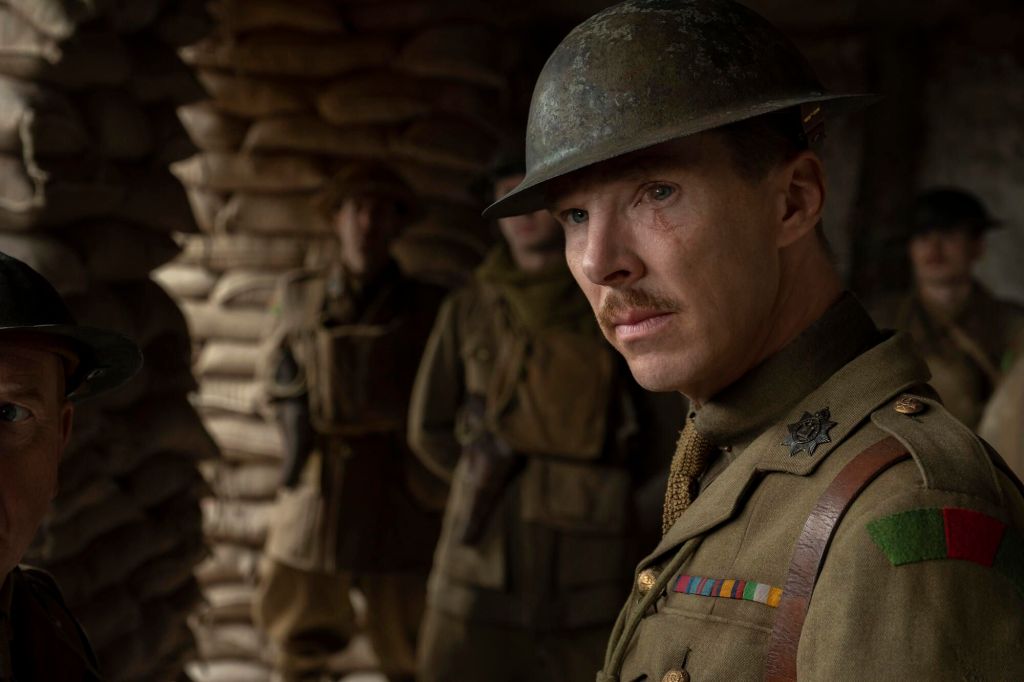
Benedict Cumberbatch in a still from the film.
The undeclared heroes of the film, however, are cinematographer Roger Deakins, editor Lee Smith, and production designer Dennis Gassner. It is gleefully astonishing to see the fierce passion with which the technical aspects of the film bury themselves into the narrative, to create an awe-inspiring ambience. The film is designed to look as if it is shot in a single continuous take, and this is achieved through (particularly) long shots, dexterous editing, and the well-timed choreography of shots. The combined effect of the constantly mobile characters and the illusion of the one-take technique necessitates the visual scapes to not wander too far beyond the central characters; we are either observing what they are witnessing, or we are observing them witnessing it. This creates a paradoxical immersion-alienation duality; while it becomes naturally easier for us to immerse ourselves in the world of the film, the enormity of the setting’s implications also becomes subconsciously prominent. The brilliant cinematography is lovingly tended to by the editing, which surreptitiously makes the film’s ambitions attainable. Aside from one specific point in the film, it is nigh impossible to indicate where the cutting room floor has been in use. The production design is meticulously expansive and unfathomably difficult to fully grasp; the sets seemingly extend for hundreds of miles, and the spatial continuity between the varied landscapes is never disrupted. The effective musical score by Thomas Newman contributes significantly to the creation of this ambience. The artifice, in summation, is wonderfully intricate.
In terms of its performances, the acting prowess of its central duo is on full display; George MacKay as Schofield and Dean-Charles Chapman as Blake embody a complex concoction of vulnerability, fear, and valour. MacKay, in particular, shines in moments of reluctance; it is almost as if his character is reluctantly and forcefully obstructing his instinctual drive in favour of letting his sense of duty thrive, and this is portrayed superbly by the actor. Certain well-established and well-known faces, such as Colin Firth, Andrew Scott, and Benedict Cumberbatch, are also present in minor (but significant) roles, as if the makers were cheekily attempting to remind the audience that it is a “major motion picture”, after all.
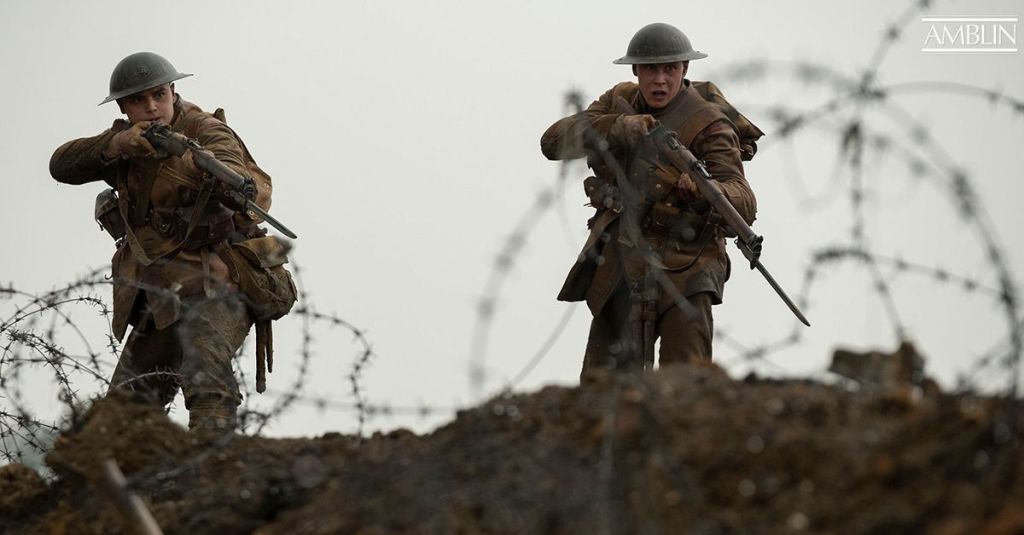
George MacKay and Dean-Charles Chapman in a still from the film.
The film is perceptibly evocative of several decorated war films of the past, such as Stanley Kubrick’s ‘Paths of Glory’ (1957), Steven Spielberg’s ‘Saving Private Ryan’ (1998), and even Christopher Nolan’s ‘Dunkirk’ (2017), the last of which which can be cited as a major reference for this film’s visual aesthetic. However, the film never feels like derivative drivel, despite the potential pitfalls of its formulaic framework, and that is primarily because of its undeniable technical merit. The film’s approach to the horrors of warfare is also noteworthy; there is no sermonising about the futility of warfare, and no deafening music to accompany gimmicky shots of ghastly violence. Instead, we are subjected to horrifying sights casually strewn around the frames, creating a phantasmagoric post-apocalyptic landscape and equating a war-stricken world to it; detached tree stumps, skeletal/rotting human corpses, other deceased animals/rodents, mud lakes, abandoned cottages, disintegrated craters, etc. None of these are intended to dominate the frame; they exist simply as wistful reminders of what war takes from us.
“[The film] bears witness to the staggering destruction wrought by the war, and yet it is a fundamentally human story about two young and inexperienced soldiers racing against the clock”, Mendes said of the film to Vanity Fair magazine. At the end of it all, it is perhaps the film’s skilful commitment to this identifiable emotional core that makes it a technical triumph and a masterclass in filmmaking on the one hand, and a deeply resonant human story on the other.
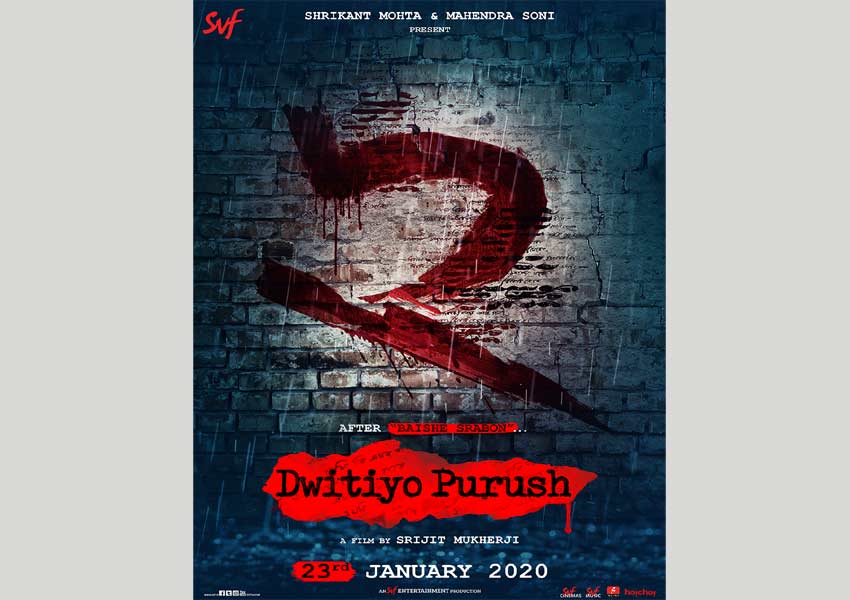
বর্তমান বাংলা চলচ্চিত্রের স্বঘোষিত “শীর্ষস্থানীয় পরিচালক” সৃজিত মুখোপাধ্যায় একাধিক সাক্ষাৎকারে সস্নেহে বলেছেন যে ‘বাইশে শ্রাবণ’-এর প্রতীয়মান জনপ্রিয়তা তাঁকে বাধ্য করেছে ‘দ্বিতীয় পুরুষ’-কে এক প্রীতিপূর্ণ পরিবারের নবাগত সদস্যর রূপে দেখতে। যদি পারিবারিক প্রতিবেশের সঙ্গেই সমান্তরাল খুঁজতে হয়, তাহলে হয়তো দেখা যাবে যে ‘দ্বিতীয় পুরুষ’ হচ্ছে পরিবারের সেই চালিয়াত যুবক, যে নিজেকে যতটা ধূর্ত আর নিপুণ বলে মনে করে, আদতে সে ততটা নয়।
1993 সালে কলকাতার চায়নাটাউনে খোকা নামক এক কুখ্যাত তরুণ গুন্ডা একাধিক হত্যার এবং বেআইনি কৃতকর্ম চালানোর অভিযোগে কারাদণ্ডে দণ্ডিত হয়। এখন, পুলিশের অনুমান অনুযায়ী, কারাবাস থেকে মুক্তি পাওয়ার পর চায়নাটাউনের এবং অপরাধজগতের অন্ধকার গলিতে প্রত্যাবর্তন ঘটেছে খোকার। এই প্রত্যাবর্তনের রহস্য উদ্ঘাটন করার দায়িত্ব প্রদান করা হয় অভিজিৎ পাকড়াশিকে। মূল গল্প এই ইঁদুর-বেড়ালের খেলাকে এবং খোকাকে পাকড়াশির পাকড়াও করার চেষ্টাকে কেন্দ্র করেই অগ্রসর হয়। কাহিনীর বেশি অংশ ব্যক্ত করাটা উচিত হবে বলে মনে হয় না, আর এর অধিক কিছু বলার প্রয়োজন আছে বলেও মনে হয় না।
যখন কেউ অঙ্ক কষতে বসে, তখন সে খুব সতর্ক হয়ে প্রতিটা পদক্ষেপ নিরূপণ করে, কারণ একটা পদক্ষেপ এদিক-ওদিক হয়ে গেলেই অন্তিম ফল হবে লবডঙ্কা; একটি সার্থক থ্রিলারের চিত্রনাট্য রচনার প্রক্রিয়াতেও এই সূক্ষ্ম সুচিন্তিত নির্ভুলতার প্রয়োজন হয়, কারণ গল্পের মসৃণতায় একটা ছোট্টো গর্ত প্রকট হলেই বিপর্যয়। এই ক্ষেত্রে, চিত্রনাট্যকার সৃজিতবাবু বেশ কিছু গর্তের মেরামত করতে পারেননি। মনে একটা অক্রূর সরলতা নিয়ে উনি দর্শককে ছবিটা চামচ দিয়ে খাইয়ে দেন বটে, কিন্তু এই সরলতার সঙ্গী হয়ে আসে এই ধারণা যে আমরা স্পষ্টভাবে পরিবেশিত খাবারটা খাওয়াকালীন তাঁকে আর কোনো প্রশ্ন করবো না; কেন খাওয়াচ্ছেন, কোন উপকরণসমূহ দিয়ে তৈরি, যেমনটা স্বাদ হবে বলে মনে হয়েছিল তেমনটা নয় কেন, ইত্যাদি।
সংলাপও হতাশাজনক; যে ধারালো এবং চটপটে সংলাপের জন্য সৃজিতবাবু খ্যাত, সেই সংলাপগুলিকে আজ বড়োই কৃত্রিম মনে হয়। মনে হয় যেন কেবল সংলাপের পরিকল্পিত প্রতিক্রিয়ার (দর্শকের বাহবা ও হাততালির) কথা ভেবেই উনি উল্লসিত হয়ে লেখেন; মাঝে মাঝেই অনুভব করা যায় যে এখানে চলচ্চিত্রের প্রতি উদ্দীপনার চেয়ে বেশি প্রবল মুরুব্বিয়ানা।
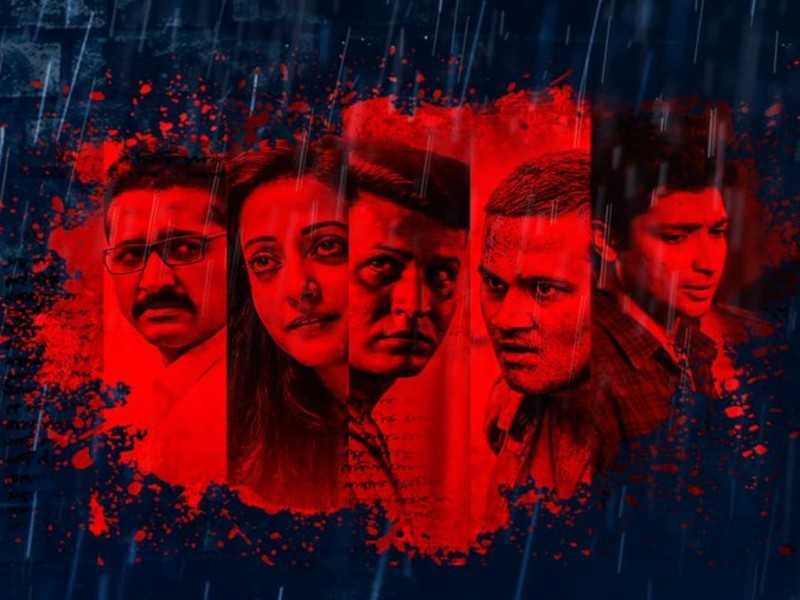
1993-র খোকার ভূমিকায় ঋতব্রত মুখোপাধ্যায় ও বর্তমান কালের খোকার ভূমিকায় অনির্বাণ ভট্টাচার্য নজর কাড়বেন নিঃসন্দেহে। অনবদ্য অভিনয় দুজনেরই; তাঁদের চরিত্রের হিংস্রতাটাকে যেন অবলীলায় আপন করে নিয়েছেন তাঁরা। অভিজিতের ভূমিকায় পরমব্রত চট্টোপাধ্যায় যথাযথ, এবং ‘বাইশে শ্রাবণ’-এর ঘটনার পরবর্তীতে তাঁর চরিত্রের মানসিক পরিবর্তনকে তিনি ফুটিয়ে তুলতে পেরেছেন। সহায়ক তদন্তকারী রজতের ভূমিকায় গৌরব চক্রবর্তী চলনসই। অভিজিতের স্ত্রী অমৃতার ভূমিকায় রাইমা সেন ও রজতের প্রেমিকার ভূমিকায় রিদ্ধিমা ঘোষ হতাশাজনক; চিত্রনাট্যও তাঁদের বিশেষ সুযোগ দেয়নি প্রতিভা প্রদর্শনের, এবং যেটুকু দেওয়া হয়েছে, সেটুকুর রসও নিংড়ে বের করতে পারেননি দুই অভিনেত্রী।
সৌমিক হালদারের চিত্রগ্রহণ বেশ কিছু ক্ষেত্রে চিত্তাকর্ষক, বিশেষ করে কয়েকটি পশ্চাদ্ধাবনের দৃশ্যে; কিছু জায়গায় একটু অপরিপক্কও বটে, কারণ আলোর ব্যবহার মাঝেমধ্যে বেমানান আর ক্যামেরার ছায়া মাঝেমধ্যে দৃশ্যমান। গান ও নেপথ্যসঙ্গীত নিয়ে নালিশ করার কিছু নেই, এবং অনুপম রায়ের ‘যে কটা দিন- রিপ্রাইজ’ ছবির প্রসঙ্গে বেশ বলবৎ।
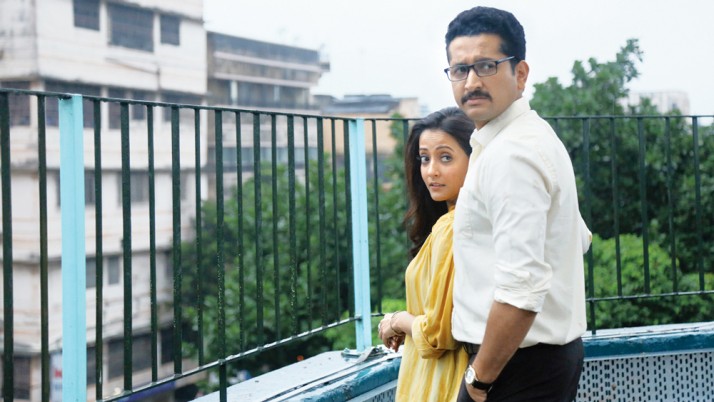
ছবির এক দৃশ্যে পরমব্রত চট্টোপাধ্যায় এবং রাইমা সেন।
আরেকটু মনস্তাত্ত্বিক এবং ভাবগত স্তরে, ছবিটি কিছু অস্বস্তিকর বিষয়বস্তুর মুখোমুখি হয় বটে, কিন্তু সেগুলো নিয়ে আলোচনাটা উপরিতলের বেশি নীচে নামে না। তবুও, একটা গুরুত্বপূর্ণ প্রশ্ন ছবির পরিসরে এবং বৃহত্তর সমাজব্যবস্থাতে প্রাসঙ্গিক: সবচেয়ে নিষ্ঠুর এবং হিংসাত্মক অপরাধীদের কী মৃত্যুদণ্ডই প্রাপ্য, নাকি তাদেরও মানসিক পুনঃপ্রাপ্তির সুযোগ-সুবিধা তৈরি করা আমাদের দায়িত্ব? এই প্রশ্নের উত্তর ছবি প্রত্যক্ষভাবে দেয় না, কিন্তু আপনার মনে প্রশ্নটা একটি ছোটোখাটো স্থান দখল করলেও সেটা একটা কৃতিত্ব।
শেষমেশ, আপনাকে বলা দরকার যে যদি আপনি ছবির শেষ অঙ্কের ‘বিস্ফোরক’ উন্মোচনের জন্য দুই ঘন্টার অনুমেয় জাবর কাটা দেখতে রাজি থাকেন, তবে ছবিটি সানন্দে দেখুন। আগের ছবিটির ‘গভীরে যাও, আরও গভীরে যাও’-এর বার্তা যদি রপ্ত করে ফেলে থাকেন, তাহলে অবশ্য ওই বিস্ফোরণের তেজ খুবই ক্ষণস্থায়ী হবে। আর, সৃজিতবাবুকে বলা দরকার যে ছবি বানাতে চাতুর্যবোধ আর নস্টালজিয়া ছাড়াও কয়েকটা জিনিসের প্রয়োজন হয়; সেগুলো নিয়ে আবার একটু নাড়াচাড়া করতে ক্ষতি কী?
এই প্রশ্নটির উত্তর মানবজাতি শত শতাব্দী ধরে খুঁজে বেড়াচ্ছে। প্রাচীন গ্রীসের এক দার্শনিককে আর বর্তমান বিলেতের এক যুবতীকে সময়ের ঊর্ধ্বে যুক্ত করে কিছু আদিম আবেগ আর নিজেদের পরিচয়ের এই অন্তহীন খোঁজ। এরকম পৃথিবীতে, একটা নিবন্ধের মধ্যে একজনের পরিচয় বন্ধ করে রাখার নির্দেশ কী ন্যায্য?
একদম বাল্যকাল থেকেই চলচ্চিত্রের পরিচালক হওয়ার শিশুসুলভ আকাঙ্ক্ষা। এখন কেউ আমায় শিশু বলে মেনে নেবে কী না জানি না, কিন্তু আকাঙ্ক্ষা এখনও ষোলো আনা। কয়েক বছর আগে থেকে টুকটাক লেখালিখিও করি, তাই আশা করছি যে এটা ওই দুটোর মধ্যে একটা মেলবন্ধন ঘটাতে পারবে।
আজীবন virtual media নিয়ে একটু হিমশিম খেতে হয়েছে, এবং সমবয়সী লোকজনের চেয়ে এক্ষেত্রে আমি অনেকটাই কম পটু। সময়ের সাথে সাথে বন্ধুবান্ধবদের ব্যঙ্গ এবং নবপ্রজন্মের সাথে ব্যবধান, দুটোই বেড়েছে। এটা বলবো না যে এই blog-টাকে আমি সংশোধনের উপায় হিসেবে দেখছি, কারণ “সংশোধন”-এর এখানে কিছু নেই; কিন্তু, এটার দ্বারা একটু ভারসাম্য আনার চেষ্টা করা যেতেই পারে। আমি অবশ্য আজও হাতে-কলমে লেখাকেই আমার নির্বাচিত পদ্ধতি বলে মনে করি।
চলচ্চিত্রের এবং চলচ্চিত্রে প্রদর্শিত বিষয়ের ইতিহাস খুব বিচিত্র। সেই বৈচিত্র্যকে ব্যবহার করে শিরোনামের প্রশ্নটার উত্তরের সন্ধানে আমিও বেরিয়েছি। আপনারা সাথে এলে আপ্লুত হবো।
(নেহাৎ শখ করে লিখি, তাই অজস্র ভুলত্রুটি থাকবেই। The pens of others might be mightier than the sword, but mine certainly is not; তাই, না হয় একটু শিশু ভেবেই মার্জনা করে দেবেন।)

 Contemplations of a Chaotic Cinegoer